
A slower way to travel and why it matters
Sometimes the most memorable travel experiences come from the paths we walk more than once.
For years, many of us travelled around schedules.
School holidays. Work leave. Long weekends.
We tried to make the most of every opportunity, especially when time was limited and every holiday felt precious.
Retirement can offer something different.
When the pressure to squeeze everything into a week or two begins to ease, other questions can emerge:
What if I didn’t need to see more?
What if I simply experienced more of where I already was?
This idea sits at the heart of slow travel.
And it may be one reason this way of travelling begins to feel more appealing in retirement.
What slow travel really means
Despite the name, slow travel is not necessarily about moving slowly.
It is not about avoiding adventure, staying in one place forever or spending months wandering around Europe.
Slow travel is less about how far you go and more about how you experience a place.
Instead of rushing from one attraction to the next, you give yourself time to settle in. You notice more. You leave space for unexpected discoveries. You let a destination reveal itself gradually rather than trying to consume it all at once.
A traditional holiday might involve visiting five places in ten days.
Slow travel might mean spending those same ten days in one place and experiencing it more deeply.
Neither approach is right or wrong.
They simply create different experiences.
And for many retirees, the slower approach can feel more appealing.
The shift is from covering ground to inhabiting a place.
Why travel often feels different in retirement
One of the unexpected things about retirement is that travel can start to feel different in ways that matter.
Not worse.
Not less exciting.
Just different.
When time was short, it made sense to fit as much as possible into each trip.
Retirement can change that equation.
There may be more flexibility in how long you stay, how much you do each day and the experiences you choose.
You may also notice your priorities have shifted.
You may find yourself caring more about comfort, connection and meaning than you once did.
Instead of asking, “What should we see?” you might ask, “How do I want this trip to feel?”
That’s not a loss of adventure.
It’s a different relationship with travel.
If you’ve noticed something similar, you may also enjoy reading Travel Feels Different in Retirement and That’s Okay.
The benefits of travelling more slowly
You notice more
When you are constantly on the move, experiences can begin to blend together. A cathedral becomes another cathedral, a market another market and a beautiful street another photograph.
Stay a little longer, though, and different details begin to emerge.
You notice which café fills with locals each morning. You recognise familiar faces, develop favourite walking routes and begin to notice the rhythm of daily life.
You start to experience the texture of a place rather than only its highlights.
Travel feels less exhausting
Active travel can still be enjoyable in retirement, but being constantly on the move can become tiring.
Packing, unpacking, transfers and long travel days can start to take some of the enjoyment out of the experience.
Slow travel creates breathing room.
There is less pressure to make every moment count, and more room to rest when you need to or linger when something captures your attention.
Experiences often become more meaningful
One of the quiet gifts of slow travel is that it allows experiences to deepen.
You are not simply passing through a place.
You begin to develop a relationship with it.
That sense of familiarity can create memories that linger long after the trip ends.
When a destination starts to feel like home
One of our favourite travel experiences was a two-week stay in Salisbury, England.
We were pet sitting for one week, which gave our days a natural rhythm. Each morning and evening, we walked the dog, Sunny, through different parts of the city, exploring parks, neighbourhoods and pathways we may never have discovered otherwise. Sunny and her family welcomed us into their home.
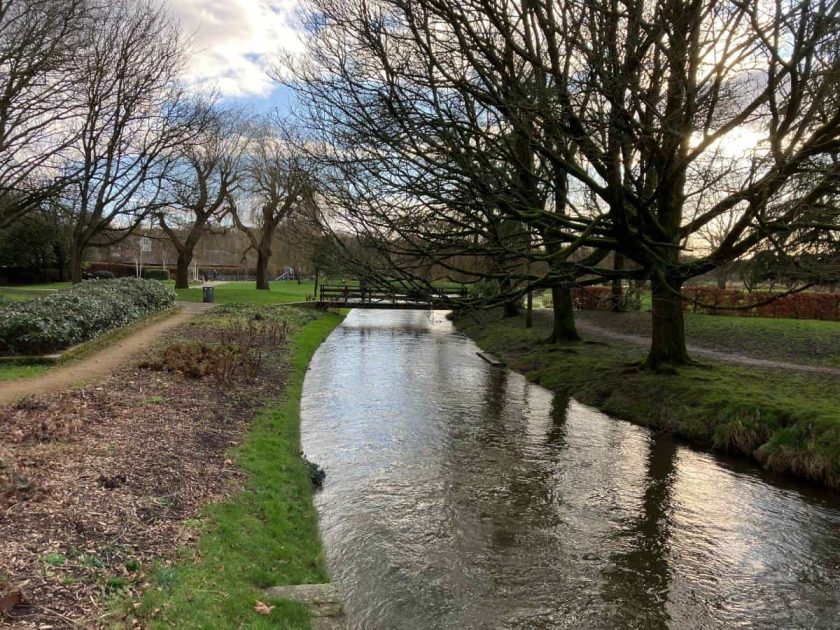
For a few days on either side of the pet sit, we explored the area on foot. Then we walked across the town path through the Harnham water meadows to meet our host family.
Of course, we also visited some of the well-known attractions. We took a great Stonehenge bus tour, recommended by the friendly staff at the Salisbury Information Centre.
We wandered through local markets, enjoyed lunch, chatted with local vendors and purchased some local treats.
We visited Salisbury Cathedral and Museum.
Those experiences were wonderful, and we still talk about them today.
Yet when I think about Salisbury, those are not the first memories that come to mind.
What I remember is the feeling of familiarity that developed slowly.
We recognised streets.
We knew where to buy groceries.
We had favourite walking routes, and so did Sunny.
For those two weeks, Salisbury stopped feeling like a destination and started feeling like a temporary home.
That experience taught me something important about slow travel.
Someone asked me recently which place had stayed with me most from our travels. Without hesitation, I said Salisbury. It wasn’t one particular attraction. It was the people, the familiarity and the feeling of being welcomed into everyday life there.
The memories that stay with us are not always the biggest moments. Sometimes, they are the ordinary moments that give us a sense of belonging.
Meaning over momentum
Many travel articles focus on seeing more.
More destinations.
More attractions.
More experiences.
Slow travel asks a different question.
What if travel wasn’t about momentum?
What if it was about meaning?
Not because travelling slowly is always better, but because sometimes depth feels more satisfying than volume.
Having the time or ability to do more doesn’t necessarily mean you want to fill every moment.
Instead of asking:
How much can I fit into this trip?
You might ask:
What kind of experience would feel meaningful to me now?
That one question can change how you plan and experience travel.
Simple ways to try slow travel
You do not need to book a month-long overseas trip to experience slow travel.
One of the easiest ways to begin may be close to home.
For example, you might:
- Stay a few extra days in a place you would normally visit briefly.
- Return to a destination you’ve enjoyed before rather than searching for somewhere new.
- Leave unplanned time in your itinerary.
- Choose one neighbourhood, town or region and explore it in greater depth.
- Spend time in local cafés, markets, parks and walking trails.
- Focus on experiences rather than sights.
Small still counts.
A thoughtful weekend away can teach you as much about slow travel as a longer journey.
A different way to think about your next trip
You do not have to travel further to travel differently.
Sometimes the most meaningful change is not the destination itself.
It is the pace.
The intention.
The willingness to notice more.
If travel has been feeling different lately, perhaps this is part of the reason.
You may not be losing interest in travel.
You may simply be drawn to experiences that feel spacious, meaningful and aligned with who you are now.
There is no rush to figure out exactly what that looks like.
For now, you might simply ask yourself:
What kind of experience would feel meaningful to me now?
The answer does not need to arrive immediately.
Like slow travel itself, it can unfold over time.
A quiet question
What is one travel experience you remember most clearly, and was it the attraction itself or how it made you feel?
A small next step
If you’d like to begin exploring closer to home, you may enjoy reading Local Travel Ideas for Retirees: You Don’t Have to Go Far to Begin.
Sometimes curiosity grows most naturally when we start where we are.